When a Pipe Bursts, Every Minute Counts
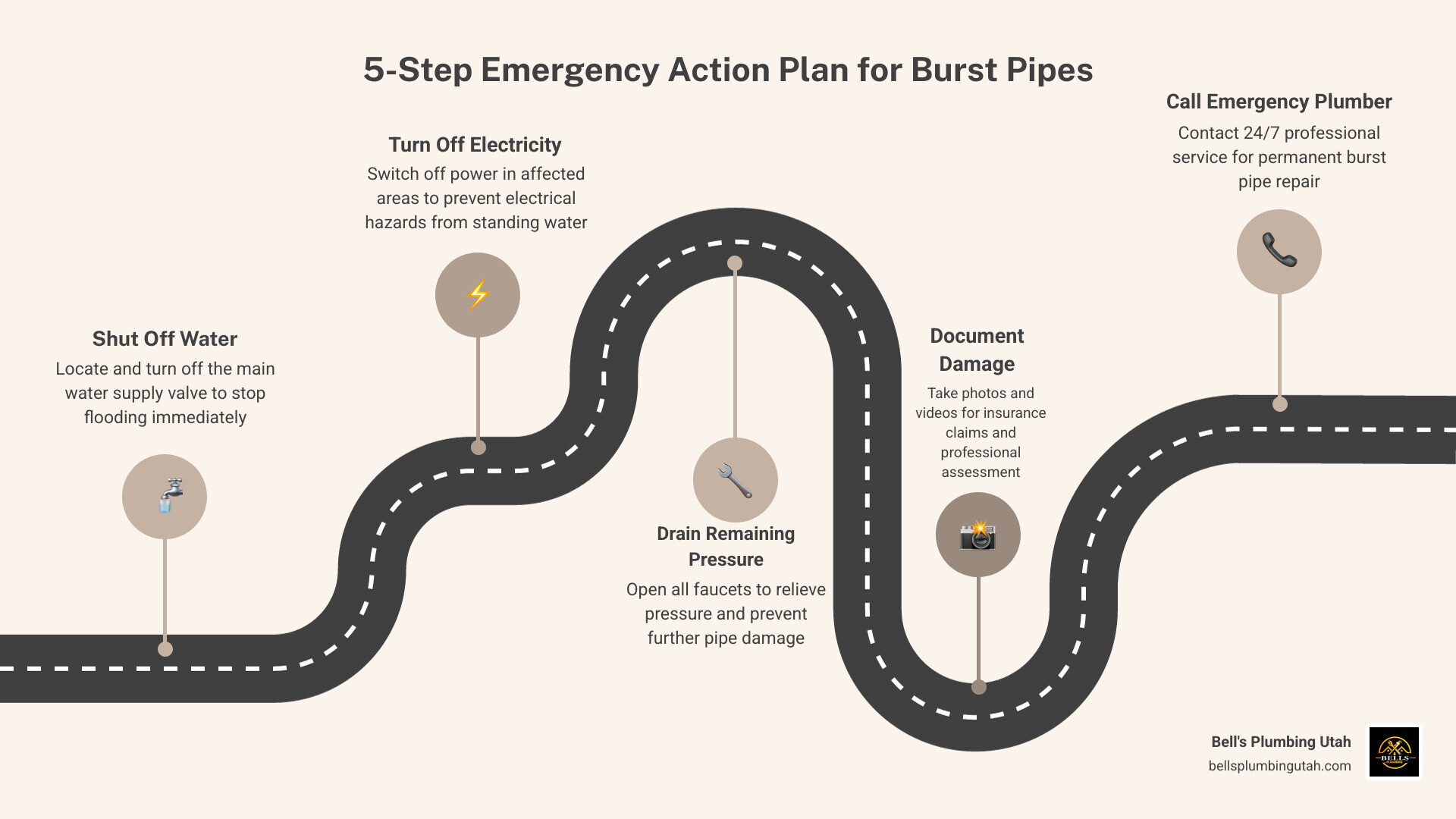
If you need a burst pipe plumber right now, here’s what to do immediately:
- Shut off the main water supply valve — this stops more water from flooding your home
- Turn off electricity in any area where water is present
- Open all faucets to drain remaining pressure from the pipes
- Document the damage with photos and video for your insurance claim
- Call a 24/7 emergency plumber — Bell’s Plumbing Utah is available around the clock
A burst pipe is one of the most stressful things that can happen to a homeowner. One minute everything is fine. The next, water is pouring into your walls, floors, or basement.
The numbers are sobering. A burst pipe can release hundreds of gallons of water per hour. Mold can start growing in as little as 24 to 48 hours. And water damage from freezing pipes alone accounts for nearly 22% of all homeowners insurance claims.
The good news? Fast action dramatically limits the damage. Knowing exactly what to do — and who to call — can be the difference between a manageable repair and a devastating loss.
This guide walks you through everything: the warning signs, the immediate steps, when to DIY versus call a pro, and how to make sure it never happens again.
Immediate Response: What to Do When a Pipe Bursts
When you hear that dreaded “whoosh” or find a growing puddle in the hallway, your adrenaline will spike. Stay calm. The goal of the first five minutes is containment.
Step 1: Kill the Water
Your first priority is to stop the flow. Locate your main water shut-off valve. In many Utah homes, this is located in the basement, near the water heater, or in a utility closet. Turn it clockwise until it stops. If you can’t find it, or it’s stuck, this is the moment a burst pipe plumber becomes your best friend.
Step 2: Electrical Safety
Water and electricity are a lethal combination. If water is leaking near outlets, appliances, or your circuit breaker, do not touch anything. If you can safely access your electrical panel, shut off power to the affected zones. If you have to stand in water to reach the panel, stop. Wait for a professional.
Step 3: Relieve the Pressure
Even after the main valve is off, there is still water sitting in your pipes. Open your faucets—both hot and cold—to drain the system. This relieves the remaining pressure and stops the “drip-drip-drip” from the burst site faster. Don’t forget to flush your toilets to empty the tanks.
Step 4: Documentation and Cleanup
Before you start mopping, grab your phone. Take clear photos and videos of the burst pipe, the standing water, and any damaged belongings. This is critical for your insurance claim. Once documented, start removing standing water with a wet/dry vacuum, mops, or buckets. For professional guidance on the repair process, you can refer to FEMA’s guide on protecting your property from water damage.
What to Do While Waiting for Help
While we are en route to your home in Salt Lake City, Bountiful, or Farmington, you can take a few more steps to minimize the “ouch” factor:
- Move Valuables: Get rugs, electronics, and furniture out of the wet zone. Water wicks up furniture legs quickly, causing permanent damage in minutes.
- Contain the Leak: If the pipe is still dripping, place buckets or bins underneath.
- Ventilate: Open windows and doors if the weather permits. If you have floor fans or a dehumidifier, get them running. Air movement is the enemy of mold.
- Stay Warm: In a Utah winter, if your furnace is affected or you’ve had to turn off the power, keep your family in a warm part of the house with blankets.
Identifying the Warning Signs of a Burst Pipe
Sometimes a pipe doesn’t “burst” with a bang; it fails with a whisper. Identifying a leak early can save you from a full-scale flood.
- Unexplained Water Stains: Look for yellow or brown rings on ceilings or “bubbling” paint on walls.
- Hissing or Banging Sounds: If you hear water running when no taps are on, or a constant hissing behind a wall, you have a problem.
- Low Water Pressure: A sudden drop in pressure often means water is escaping somewhere it shouldn’t be.
- Sky-High Water Bills: If your usage hasn’t changed but your bill has doubled, your pipes are likely leaking into the foundation or yard.
- Discolored Water: Rusty or tea-colored water can indicate that a pipe is corroding from the inside out.
- Musty Odors: That “old basement” smell is often the scent of hidden mold growing behind drywall due to a slow-burst pipe.
Signs of a Frozen Pipe Before it Bursts
In places like Bountiful and Farmington, frozen pipes are a common winter hazard. Catching a frozen pipe before it thaws and bursts is the ultimate win. Watch for:
- Visible Frost: If you see frost on the outside of a copper or PEX pipe, it’s frozen solid.
- Gurgling Noises: Strange sounds when you turn on the tap indicate air pockets caused by ice.
- The “Trickle”: You turn on the faucet and only a tiny stream comes out.
- Toilet Issues: If your toilet tank won’t refill after a flush, the supply line might be frozen.
Why Pipes Fail: From Freezing Temperatures to High Pressure
Understanding why pipes fail helps you prevent the next emergency. While freezing is the “usual suspect” in Utah, it isn’t the only one.
The Utah Winter Factor
When water freezes, it expands by about 9%. In a rigid copper or CPVC pipe, that expansion has nowhere to go. Contrary to popular belief, the pipe usually doesn’t burst at the point where the ice is; it bursts between the ice blockage and the closed faucet because of the massive pressure buildup. When the ice thaws, the flood begins. This is why a 24/7 burst pipe plumber is most in demand during the first warm day after a week-long freeze.
Corrosion and Age
If your home was built several decades ago, your pipes might be reaching the end of their lifespan. Galvanized steel and older copper pipes thin out over time due to mineral reactions. Eventually, the wall of the pipe becomes so thin that even a small pressure spike causes it to pop.
Water Hammer and High Pressure
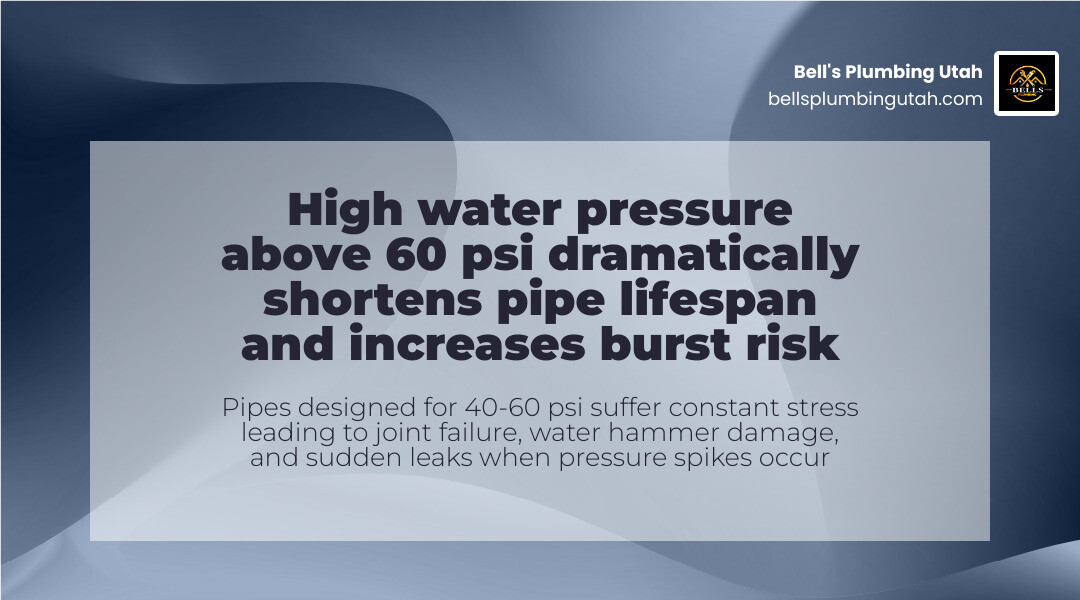
High water pressure feels great in the shower, but it’s a silent killer for your plumbing. Most residential systems are designed for 40–60 psi. If your pressure is consistently above 60 or 70 psi, it puts constant stress on joints and valves. “Water hammer”—that loud banging sound when you turn off a tap—is the result of water slamming into a valve, which can eventually fatigue the metal until it fails. For more on emergency risks, check the American Red Cross guide on home emergencies.
The Impact of Water Pressure and Age
The Professional Solution: Hiring a Burst Pipe Plumber
Can you fix a burst pipe yourself? Technically, yes—if you have a pipe cutter, deburring tools, and the right fittings. But a DIY fix is often a “band-aid” on a deeper problem.
| Feature | DIY Temporary Fix | Professional Permanent Repair |
|---|---|---|
| Tools Needed | Clamps, Epoxy, Tape | Industrial Cutters, Soldering Kits, Pro-Press |
| Reliability | Low (Temporary only) | High (Lasts decades) |
| Insurance | Often not recognized | Fully documented for claims |
| Scope | Fixes the hole | Checks the whole system |
| Warranty | None | Workmanship Guarantee |
When to Call a Professional Burst Pipe Plumber
You should call us immediately if:
- The pipe is behind a wall or under a floor.
- The burst is near electrical wiring or gas lines.
- You have multiple leaks appearing at once.
- You don’t have the specialized tools to deburr and seal the pipe correctly.
We use advanced tech like SharkBite Max fittings for rapid repairs or traditional soldering for permanent, rock-solid connections. In some cases, if an underground main line has failed, we can even perform trenchless repair, which fixes the pipe without digging up your entire yard.
What to Expect from Your Burst Pipe Plumber
When we arrive at your home in Salt Lake City or Bountiful, we don’t just “plug the hole.” Our process includes:
- Immediate Containment: Ensuring all water and power risks are neutralized.
- Accurate Diagnosis: Using leak detection tools to find the exact failure point.
- Surgical Repair: Cutting out the damaged section and replacing it with high-quality PEX or copper.
- System Testing: Turning the water back on slowly to check for “secondary” leaks that often happen when pressure is restored.
- Cleanup & Advice: We help you understand why it happened and how to prevent it from happening again.
Prevention and Maintenance: Stopping the Next Flood
The best way to deal with a burst pipe plumber is to not need one in the first place. Prevention is significantly cheaper than restoration.
Winterize Your Home
- Insulate Exposed Pipes: Use foam sleeves or “heat tape” on pipes in unheated areas like crawl spaces, attics, and garages.
- The 55°F Rule: Never set your thermostat lower than 55°F, even if you are going on vacation.
- Drip the Faucets: During a Salt Lake City cold snap, let a faucet furthest from the main shut-off drip slowly. Moving water is harder to freeze.
- Outdoor Spigots: Disconnect garden hoses and shut off the indoor valves leading to outdoor faucets before the first frost.
Long-Term Plumbing Health
- Pressure Regulators: If your home’s water pressure is over 60 psi, we can install a pressure-reducing valve (PRV) to protect your pipes.
- Annual Inspections: A quick professional check-up once a year can catch corrosion or “pinhole” leaks before they become disasters.
- PEX Upgrades: If you are doing a renovation, consider switching older copper to PEX. PEX is flexible and can actually expand slightly if it freezes, making it much more “burst-resistant” than metal.
Frequently Asked Questions about Burst Pipes
Does homeowners insurance typically cover burst pipe damage?
Generally, yes. Most standard policies cover “sudden and accidental” water damage. This includes the cost of the water damage restoration and the access to the pipe (like cutting through drywall). However, they often do not cover the cost of the plumbing repair itself if it was caused by lack of maintenance (like leaving your heat off in winter). Always document everything to help your claim.
How much damage can a burst pipe cause in an hour?
A standard residential pipe can release 40 to 60 gallons per minute. In one hour, that’s over 3,000 gallons of water. This is enough to saturate floor joists, ruin hardwood floors, and even compromise your home’s foundation. This is why the 24-hour window for drying is so critical to prevent structural rot.
What is the typical repair process for a burst pipe in a basement?
First, we locate the break—which can be tricky if it’s behind a finished wall. We then cut out the damaged section, ensuring we remove at least 5-10 inches of pipe to get past any stressed metal. We “deburr” the ends (smoothing them out) and install new fittings. Finally, we perform a pressure test to ensure the system is 100% sealed before we leave.
Conclusion: Your Local Emergency Experts
A burst pipe is a race against time. From the moment the metal cracks, the clock is ticking on your floors, your walls, and your peace of mind. By following the emergency steps—shutting off the water, killing the power, and calling a pro—you can turn a potential catastrophe into a manageable repair.
At Bell’s Plumbing Utah, we’ve seen it all—from frozen pipes in Bountiful to high-pressure blowouts in Salt Lake City. We are your neighbors, and we are ready to help 24/7.
Don’t wait for the water to rise. If you suspect a leak or have a full-blown emergency, contact us immediately. We’ll get the water off, the repairs done, and your life back to normal.